Stone Wheels, Sticky Jaggery and a Bitter Fruit: The Unlikely Ingredients of Krithika Venkatesh's Lime House
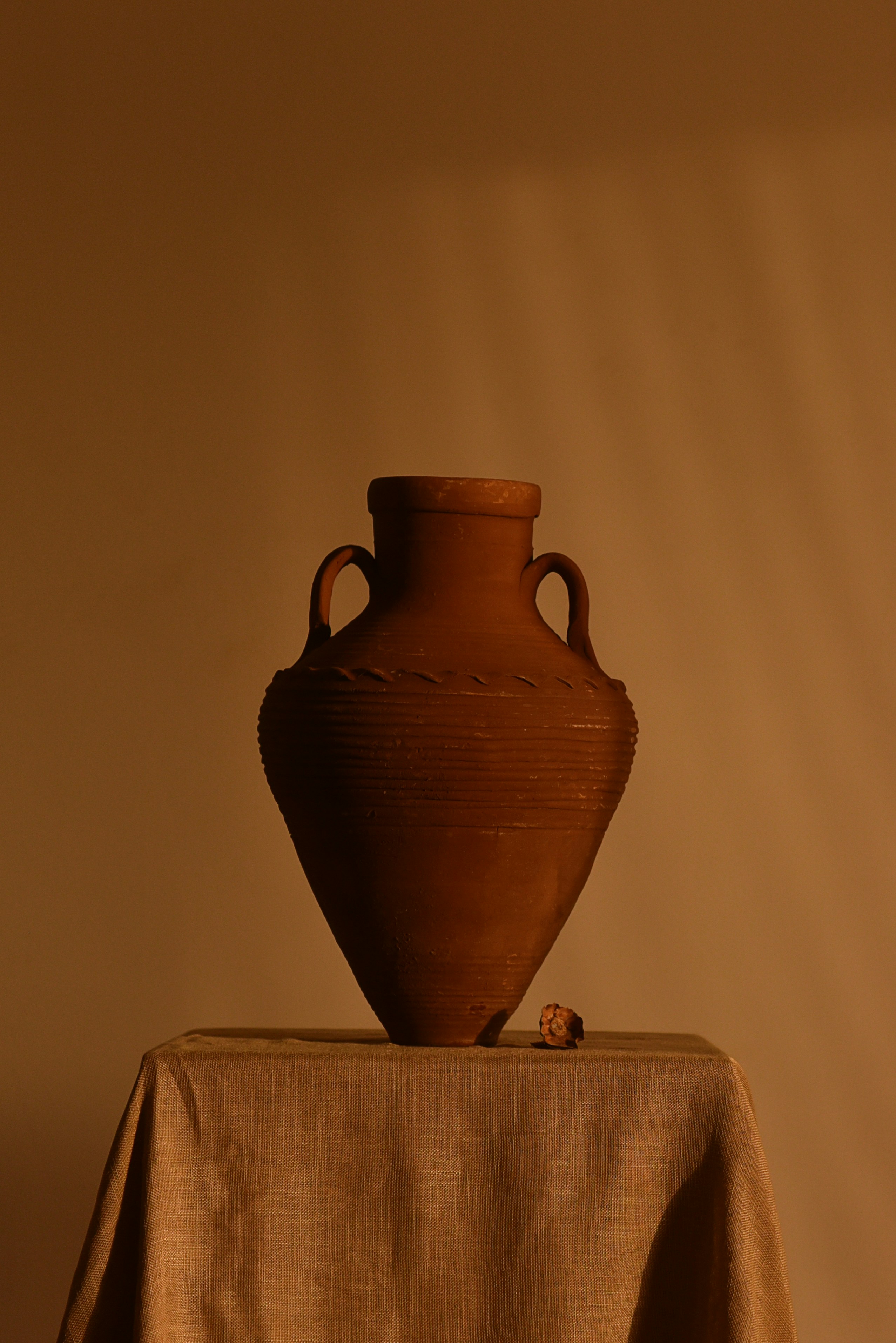
Krithika Venkatesh of Earthen Studio is building a house near Chennai with no cement in its walls. Her binder is lime, fermented with a bitter fruit and palm jaggery.

A stone wheel, taller than a child, rolls around a round trough on an iron arm. It grinds lime into mortar, slowly, the way it was done long before cement bags arrived in Tamil Nadu.
That wheel is the lime chakki. It is where Krithika Venkatesh's houses begin.
Venkatesh founded her practice, now Earthen Studio, in 2018. She builds around Chennai with lime, stone, earth and timber. Her house at Mambakkam, on the city's southern edge, has no cement in its walls at all.
"Cement has become the default material for construction, but it is not the only way to build," she told us.
A recipe that smells when it's ready
The binder in those walls is lime. It is burnt from limestone, slaked, and then fermented with two things you would sooner find in a kitchen: kadukkai, the dried myrobalan fruit, and palm jaggery.
Venkatesh says the lime came from Poonamallee and Mannivakkam, both in Chennai. The kadukkai and jaggery sit with it for days. "Ingredients such as kadukkai (myrobalan) and palm jaggery are fermented for three to seven days," she says.
How do you know a batch is done? Not with a gauge. With your nose and your fingers.
"The batch will give out a pungent smell that tells you it is well fermented, and the liquid gets a higher viscosity, forming a 1 cm thin string when touched and rubbed between the fingers."
None of this is folklore she made up. A kadukkai and jaggery brew is written into IS 2119, the 1980 Indian standard for Madras terrace roofs. What's hers is the method. She says the studio "arrived at the proportions after extensive research and after testing the compressive strength of mortars with different additives in different quantities." In plain terms: how much weight each sample carried before it crumbled.

A roof of bricks on edge
Above the lime walls sits a Madras terrace roof. Thin bricks are set on edge over closely spaced timber joists, then layered with lime. Chennai has built this way since the 18th century.
Venkatesh treats the roof and walls as one system. The heavy roof holds heat back. The lime walls let moisture move. She is careful not to oversell either.
"Passive cooling is never the result of one material alone," she says. It depends on orientation, windows, trees and how air moves through the rooms.
So the house is turned to the north and east. The hot south and west sides get narrow openings. She says the roof is 12 feet high and the walls are 1 ft 3 in thick. When the New Indian Express visited the site in 2024, Chennai had just touched 40°C. Its reporter found the rooms noticeably cooler inside.

Selling a slower house
The hardest part isn't the lime. It's the client.
"Most clients are familiar with cement construction and its timelines," Venkatesh says. "They may associate a more industrialised process with greater reliability."
She sets out the trade-offs early: time, labour, upkeep. Some stages can't be rushed. Lime needs the right curing. It needs protection from water. "The material alone cannot compensate for poor design or execution," she says.
Her answer is to change what counts as efficient. "For us, the real measure of efficiency is not simply how quickly a building is completed," she says. It's comfort, durability, and whether the house can be repaired with the same materials it was built from.

The hands behind the walls
A lime site needs more people who know things. Masons, carpenters, engineers and traditional practitioners all have to talk to each other. Venkatesh says that chain has broken in places. "The materials may still exist, and practitioners may still be working, but the connections between them are often fragmented."
She wants that labour paid properly. "We believe their knowledge should be recognised and compensated fairly, with attention to working conditions, insurance, and healthcare."
She also opens her sites. Earthen Studio held a workshop at the Mambakkam plot in June 2024, and a site visit at its Thiruporur project in March 2025. Her test for whether it worked is simple. "If someone leaves a site visit looking at an ordinary wall or roof differently, asking where its materials came from and who made it, then the visit has already achieved something meaningful."
The house also treats its own used water on site. "We do not let our used water into the rivers," she says.

Lime will win on numbers, not nostalgia
Our view: the lime house Mambakkam proves the method works. The next job is to prove it to people who don't already love it.
Venkatesh has the right instinct. She tested her mortars instead of trusting memory. Now she should publish the results: the proportions, the strengths, the curing times, the indoor temperatures through a Chennai May.
The reason is money. A senior Chennai artisan told the New Indian Express in 2021 that clients ask about Madras roofs, compare the price with cement, and walk away. A 40% premium won't be closed by warm words about heritage. A test report an engineer can sign might close it.
She is not alone in this. Architect Benny Kuriakose in Chennai and Biju Bhaskar of Thannal Natural Homes in Tiruvannamalai have long built with lime and little or no cement. What could set Earthen Studio apart is the data.
She already knows the question. "How can we build for the present without compromising the ability of future generations to repair, adapt, and care for what we leave behind?"
The stone wheel answers half of it. Published numbers would answer the rest.


Comments